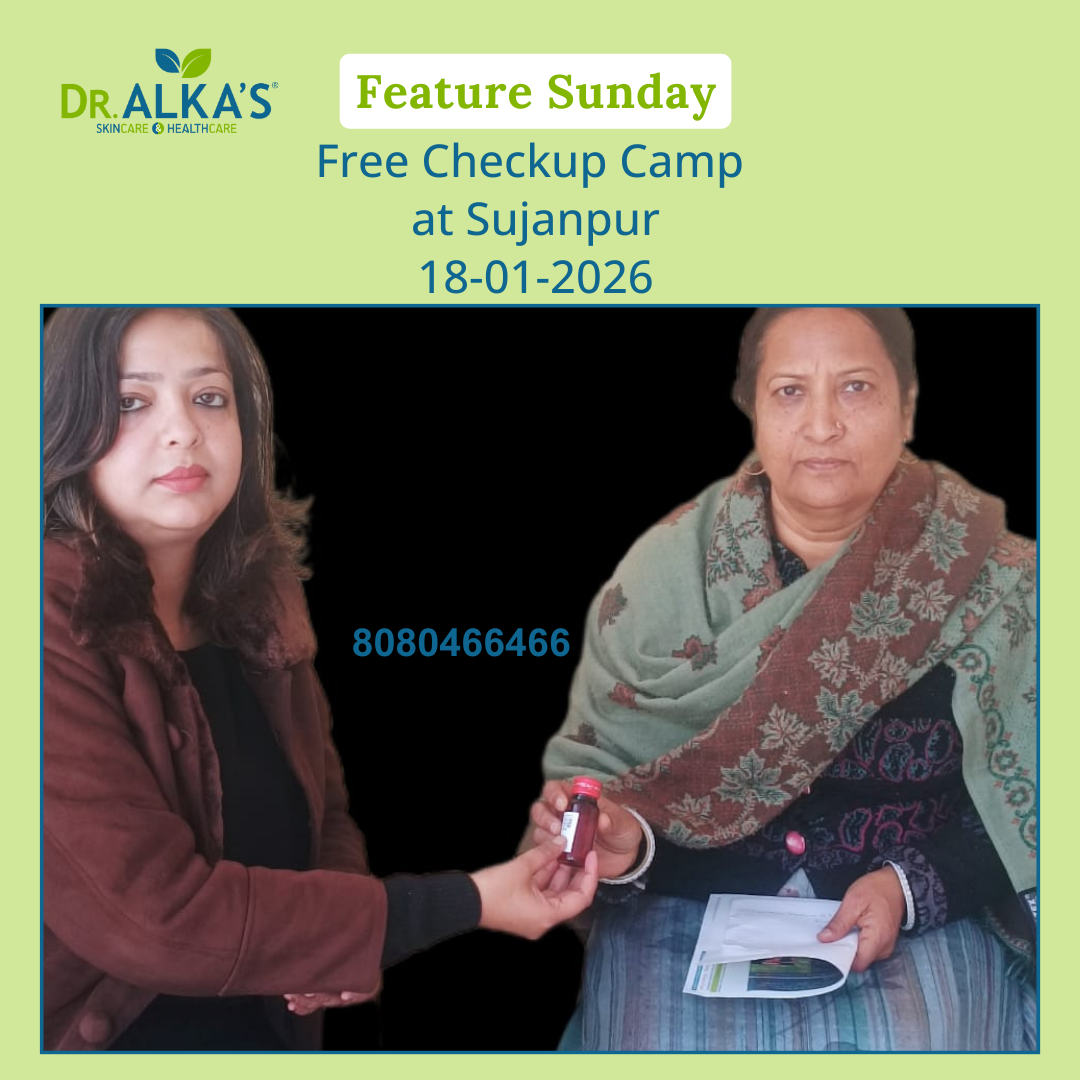
Free Skin Checkup Camp at Sujanpur , Village Kilashpur
Dr. Alka’s Skin Care & Health Care At Dr. Alka’s Skin Care & Health Care, our mission has always been to make ethical, expert dermatological care accessible to every community. Continuing this commitment, we are pleased to organize a Free Skin Checkup Camp at Sujanpur, Kul Number 4, Village Kilashpur, dedicated to early detection, awareness, and guidance for common and chronic skin concerns. Purpose of the Skin Checkup Camp Skin diseases often remain ignored until they become severe. Through this camp, our objective is to help people identify skin, hair, and scalp issues at an early stage, receive professional advice, and understand the right course of treatment. The camp is especially aimed at individuals who may not have regular access to specialized dermatology services. Dr. Alka’s Message “Healthy skin is not a luxury; it is a basic part of overall health. Through com
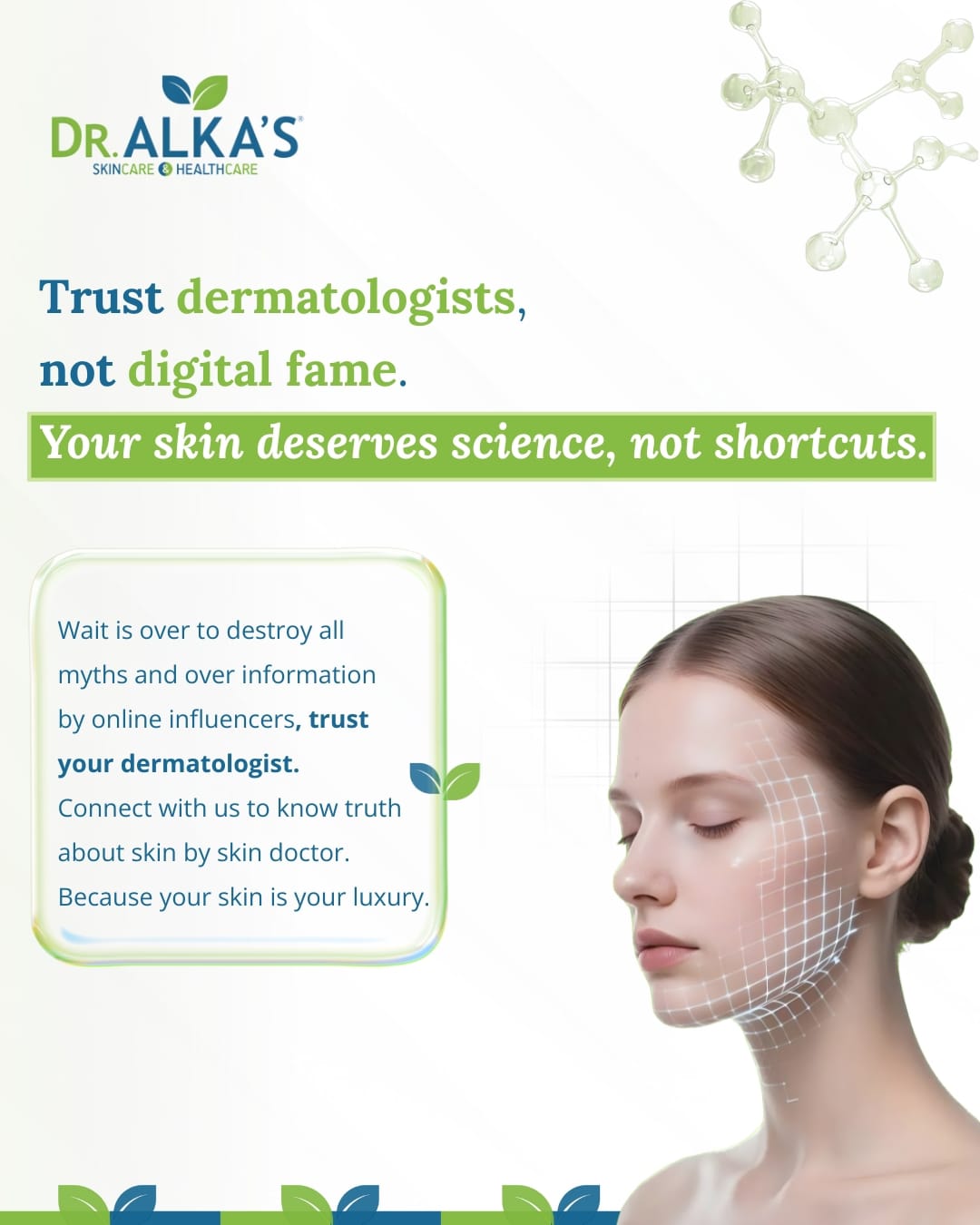
Dermatology vs Social Media Skincare: Why Healing Skin Requires Looking Beyond the Surface
Endorsed By Dr Alka Mehta MBBS, MD(Dermotology) In today’s world, skincare advice is everywhere. A quick scroll offers routines, productrecommendations, before-and-after pictures, and confident opinions on what works and whatdoesn’t. For many people, this abundance of information feels empowering at first — untiltheir skin doesn’t respond the way it was promised. When patients come in after trying multiple online routines, they often say the same thing:“I followed everything correctly, but my skin still isn’t better.” The reason is rarely a lack of effort.More often, it is because skin is being treated in isolation, instead of being understood aspart of a whole person. This is where the difference between dermatology and social media skincare becomesimportant. Dermatology begins with a simple but essential question:Why is this happening? Without diagnosing the root cause ,
What Makes a Dermatologist Truly Trustworthy in 2026?
Endorsed By Dr Alka Mehta MBBS, MD(Dermotology) In 2026, skin and hair advice is everywhere.Instagram reels, ads, blogs, influencer routines, “derm-approved” products — all competingfor attention. Yet, despite having more information than ever, patients are more confused than before. One of the most common things patients tell me is:“Doctor, I don’t know who to trust anymore.” And honestly, that concern is valid. So let’s talk about it — what actually makes a dermatologist trustworthy in 2026?Not popular. Not viral. But genuinely reliable. 1. A Trustworthy Dermatologist Is Doctor-First, Not Trend-First Skincare trends move fast. Medical evidence does not — and it shouldn’t. A trustworthy dermatologist does not recommend something just because: Instead, they ask: Sometimes, when your dermatologist pauses before recommending a treatment, that pause isnot doubt — it’